
iGAM Buyer's Resource
Used & Refurbished
Industrial Robot
Buying Guide
Everything you need to know before purchasing a used industrial robot — condition grades, what to inspect, questions to ask, and how to avoid common pitfalls. Written by the team at iGAM with 20+ years in the secondary market.
Why Buy Used?
80%
Up to 80% off vs. new
replacement cost
replacement cost
4–6
Weeks typical lead time
for new robots — vs. days for used
for new robots — vs. days for used
20+
Year service life for
major-brand industrial robots
major-brand industrial robots
341
Robots in stock
in Detroit right now
in Detroit right now
The Case for Used
Why the Secondary Market Makes Sense
Industrial robots are built for decades of service. A well-maintained used robot can deliver the same throughput as a new unit at a fraction of the cost and timeline.
Lower Capital Outlay
Used robots typically sell for 40–70% below new replacement cost. For a 10-robot line, that's a difference of hundreds of thousands of dollars — capital that stays in your operation.
Faster Deployment
New robots from major OEMs can carry 16–24 week lead times. Used robots at iGAM ship from our Detroit warehouse in days — getting your line running on your schedule, not the manufacturer's.
Proven Reliability
Major-brand robots (FANUC, KUKA, ABB, Yaskawa) are engineered for 50,000+ hour service life. A robot that has run 5 years in a clean automotive plant still has many productive years ahead of it.
Immediate Parts Availability
Because used robots are current-generation models, OEM parts, servo drives, and teach pendants are readily available — unlike older legacy platforms where parts are discontinued.
Sustainability
Extending the useful life of capital equipment reduces manufacturing waste and energy consumption. Buying used keeps functioning machinery out of the scrap cycle.
Stronger ROI
Lower acquisition cost means faster payback periods on automation projects. Manufacturers running thinner margins can automate processes that wouldn't pencil out with new-equipment pricing.
Condition Grading
Understanding Robot Condition Levels
Not all used robots are equal. The secondary market uses a range of condition designations — here's what each one means and what you should expect when purchasing at each level.
Excellent / Refurbished
Fully Operational
Inspected, tested, and repaired to like-new working condition. May include fresh paint, new seals, and verified calibration. All faults addressed and documented.
- Test cycle verified by technician
- All axes move to spec
- Fault codes cleared & resolved
- May include short-term warranty
Best for
Drop-in production replacement, minimal integration time required
Good / Working Used
Operational As-Is
Powered on, axes move, no known faults — but sold without refurbishment. May show cosmetic wear and normal service hours. Minor maintenance recommended before deployment.
- Confirmed power-on & motion
- Known fault codes disclosed
- Typical cosmetic wear
- Service manuals may be available
Best for
Buyers with in-house technical staff who can evaluate and service
Fair / As-Removed
Untested / As Pulled
Removed directly from a decommissioned line with no testing or refurbishment. Condition reflects the end-of-life state of the application. Faults unknown or undisclosed.
- Lowest price point
- Good for known applications
- Inspect before deploying
- Mechanical parts often intact
Best for
Integrators and technically experienced buyers comfortable with unknowns
Parts / Salvage
For Parts Only
Units sold specifically for components — servo drives, harnesses, J1–J6 motors, teach pendants, or mechanical assemblies. Not intended for complete robot deployment.
- OEM parts at a fraction of cost
- Known good sub-assemblies
- Useful for active fleet repair
- Listed by specific component
Best for
Maintenance teams managing an existing robot fleet
Pre-Purchase Evaluation
What to Inspect Before You Buy
A thorough pre-purchase evaluation protects you from unexpected costs after delivery. Use this checklist whether you're doing an in-person inspection or requesting a remote evaluation from the dealer.
Power-On & Motion Test
- Confirm the robot powers on and the controller boots without errors
- Request a full-axis jog test — all six axes should move freely and smoothly
- Listen for abnormal bearing noise on each axis during slow jog
- Confirm the teach pendant connects and communicates with the controller
- Check for active fault codes and ask for explanation of each
- Run a test program cycle if the unit is set up to do so
Mechanical Condition
- Inspect all six axes for backlash — excessive play indicates worn harmonic drives
- Check wrist (J4–J6) for oil leaks around seals — common wear point
- Inspect the base and body for collision damage, bent flanges, or weld repairs
- Verify the tool flange face is flat and undamaged (mount a precision level if on-site)
- Check cable dressing — damaged cable bundles raise integration cost
- Ask for maintenance history if available — lubrication intervals matter
Controller & Software
- Confirm the controller model and software version — some versions cannot be upgraded
- Ask whether licensed software options (e.g., coordinated motion, arc welding) are installed
- Verify the robot model and payload match what's registered in the controller
- Check the battery backup — dead batteries lose robot calibration data
- Request a controller mastering / zero-point calibration certificate if available
- Confirm whether the teach pendant is the correct model for the controller generation
Documentation & History
- Request the robot's serial number — verify it matches the controller
- Ask about the robot's last application (paint, welding, heavy payload, crash history)
- Confirm previous application was within the robot's rated payload and reach
- Ask whether the robot was ever involved in a collision or crash event
- Request any available service records or OEM-sourced maintenance logs
- Ask whether the warranty (if any) is documented in writing
Due Diligence
Questions to Ask Your Dealer
A reputable dealer should be able to answer all of these clearly and honestly. Vague or evasive answers are themselves useful information.
About the Robot
- What was this robot's last application — and was it running at or below rated payload?
- Has this robot ever been in a collision, crash, or overload event?
- What is the estimated operating hours or cycle count?
- Has it been mastered (zero-point calibrated) and when was it last done?
- Are all six axes operational and fault-free?
- What fault codes are currently stored and what caused them?
- Is the serial number on the arm consistent with the controller?
- Was it sourced directly from a manufacturer or through an auction?
About What's Included
- Is the matching controller included, and is it the correct generation?
- Is the teach pendant included — and is it the correct pendant for this controller?
- Are all inter-connect cables between robot and controller included?
- Are any software options (licenses) active in the controller?
About the Dealer
- Do you test your robots before selling them — and what does that testing involve?
- Can you provide video of the robot running a test cycle?
- Is there a return policy or warranty — and is it in writing?
- Who handles shipping and how is the robot packaged for freight?
- Can I do an in-person inspection at your facility before purchasing?
- Do you have references from previous buyers of similar equipment?
About Your Specific Application
- Is this robot's payload and reach appropriate for my part and process?
- Is the IP rating sufficient for my environment (wash-down, paint, foundry, etc.)?
- What controller options or software do I need for my intended application?
- Does my integrator already have experience programming this brand/model?
iGAM's policy: Every robot we list has been inspected by our Detroit technicians. We provide a power-on video on request, disclose all known faults, and can accommodate in-person inspections at our facility. Call (313) 579-4270 or visit igam.com/contact-us.
Reading the Specs Sheet
Key Robot Specifications — Explained
Robot data sheets are dense with technical terminology. This reference breaks down the specs that actually matter for most applications.
| Specification | Unit | What It Means | Buyer Guidance |
|---|---|---|---|
| Payload | kg | Maximum load the robot can carry at the wrist flange, including the weight of end-of-arm tooling (EOAT). Running a robot over rated payload accelerates wear on harmonic drives and wrists. | Size your robot to 70–80% of rated payload when EOAT is included. A "10 kg" robot carrying a 7 kg part + 4 kg gripper is already over-rated.Always account for EOAT weight. |
| Reach | mm | Maximum horizontal distance from the robot's center axis to the end of its wrist. Also called the working envelope or operating radius. Published as a 2D diagram on most spec sheets. | Model your part + fixture geometry in the robot's work cell before selecting reach. More reach adds cost — don't over-spec.A 3D reach diagram (dxf) is available from the OEM for most models. |
| Repeatability | ± mm | How consistently the robot returns to a taught position under identical conditions. Not the same as accuracy (absolute position). A robot with ±0.02mm repeatability returns to the same point within 0.02mm each cycle. | Most manufacturing processes need ±0.1mm or better. Spot welding tolerates ±0.3mm. Precision assembly may require ±0.02mm. Wear and poor calibration degrade this over time.Request a repeatability test on used units. |
| Number of Axes | axes (DOF) | Degrees of freedom. A 6-axis robot can position the tool tip at any point in space with any orientation — sufficient for nearly all general-purpose applications. Some specialized models have 4 or 7 axes. | 6-axis is the standard for welding, material handling, and assembly. SCARA robots use 4 axes and excel at flat pick-and-place. 7-axis robots offer added flexibility in confined spaces. |
| Max TCP Speed | mm/s | Maximum speed of the Tool Center Point (the tip of the robot) at full extension. Published speeds are theoretical maximums — real cycle time depends on payload, path geometry, and acceleration settings. | For high-speed pick-and-place, TCP speed matters. For welding or precision assembly, it's rarely the constraint. Don't let published speed specs drive your selection alone. |
| IP Rating | IP54, IP67, etc. | Ingress Protection rating. The first digit (0–6) is dust resistance; the second digit (0–8) is moisture/liquid resistance. IP54 = dust-protected, splash-resistant. IP67 = fully dust-tight, can be submerged briefly. | Standard environments: IP54 minimum. Paint booths, washdown lines, foundry, or high-humidity: require IP65 or IP67 rated (Clean-Room or Foundry versions).Confirm the robot's IP rating matches your environment before purchase. |
| Robot Weight | kg | Weight of the robot arm itself (not the controller). Critical for floor, gantry, or ceiling mounting engineering. The mounting surface must support the robot weight plus dynamic forces during operation. | Mounting surface must support 2–3x robot weight due to dynamic loads. Ceiling and wall mounting require structural engineering review.Never mount to drywall, grating, or unanchored steel. |
| Controller Model | — | The control cabinet generation matched to the robot. Each brand has multiple controller generations (e.g., FANUC R-30iA vs R-30iB vs R-30iB Plus). Software features and IO options differ significantly between generations. | Confirm the controller generation is compatible with your PLC, safety system, and required software options before purchase. Older controllers may not support newer fieldbus protocols.See controller section below for brand-by-brand breakdown. |
Controller Compatibility
Understanding Robot Controllers by Brand
The controller is the brain of the robot and is generation-matched to the arm. Mismatched or wrong-generation controllers are one of the most common (and expensive) mistakes in used robot purchasing.
FANUC
R-30iA / R-30iB / R-30iB Plus
Three active generations. R-30iA is the oldest (yellow teach pendant, iPendant). R-30iB introduced EtherNet/IP natively. R-30iB Plus added enhanced safety (DCS), 3D vision support, and improved IO Link. Confirm which generation you're purchasing — they are not interchangeable between robot models.
KUKA
KRC2 / KRC4 / KRC5
KRC2 is older (Windows XP-based), fully functional but no longer supported by KUKA. KRC4 is the widely-deployed current generation — robust ecosystem of parts and support. KRC5 is the newest and most compact. Programming language (KRL) is consistent across all three.
ABB
IRC5 / OmniCore
IRC5 is the dominant used-market ABB controller — available in single-cabinet and multi-cabinet versions. Features FlexPendant teach pendant. OmniCore is ABB's newest platform. RAPID programming language carries across both. Check whether you need the MultiMove (coordinated motion) option.
Yaskawa
DX100 / DX200 / YRC1000
DX100 is widely available in the secondary market. DX200 introduced improved safety functions and Ethernet/IP. YRC1000 is the current compact generation. Programming is done in INFORM language. Confirm the controller's spot welding or arc welding options if applicable to your process.
⚠️ Important: Robot arms and controllers are serial-number paired at the factory. When purchasing a used robot, always buy the matched arm and controller together when possible. Swapping controllers between mismatched robot generations requires software re-mastering, calibration procedures, and in some cases, OEM involvement to reactivate licenses. The cost of re-matching a mis-paired unit can exceed the price of the robot itself.
Completeness Check
What Should Come With Your Robot
A complete robot package is worth significantly more than individual components. Know what to expect — and what to negotiate for — before finalizing a purchase.
Typically Included — Verify Before Purchase
- Robot arm (the mechanical unit)
- Matching controller cabinet (same generation, serial-matched)
- Teach pendant with cable
- Robot-to-controller interconnect cables (motor & encoder cables)
- E-stop / operator panel (sometimes sold separately)
- Tool flange mounting hardware
- Controller battery backup (confirm it's functional)
- Any installed EOAT, grippers, or tooling
- Software option licenses (active in controller — ask specifically)
- Robot backup file / system image on USB or SD card
- Original OEM manuals (mechanical, electrical, controller)
- Mastering data / zero-point calibration record
- OEM software license transfers (rarely possible — licenses are locked to controller serial)
✓ Standard inclusion
? Ask specifically
✗ Usually not available
Items Often Missing — Factor Into Your Budget
- End-of-arm tooling (grippers, welding guns, suction cups) — usually stripped at decommission
- Mounting base, riser, or floor bolt pattern template
- External axis equipment (positioners, track systems)
- Safety fencing, light curtains, or area scanners
- PLC or cell controller (robot is sold standalone)
- Power connection / disconnect panel
- Air supply / pneumatic lines for EOAT
- Robot mastering & zero-point calibration at installation (~$500–$1,500)
- End-of-arm tooling design and fabrication
- Safety system design and integration
- Programming and application development
- Electrical infrastructure (power, communications, E-stop circuit)
Integration typically adds 30–100% of robot purchase price to total project cost depending on application complexity. Budget accordingly before committing to a purchase price.
Warning Signs
Red Flags to Watch For
The used industrial equipment market includes reputable dealers, auction resellers, and everything in between. These warning signs should prompt more questions — or walking away entirely.
No Power-On Demonstration
A reputable dealer will power on the robot and demonstrate axis movement on request or provide video evidence. Refusal to do so is a significant red flag — the unit may have undisclosed faults that prevent operation.
Mismatched Serial Numbers
The serial number on the robot arm and the number registered in the controller should match. Mismatched serials indicate the controller and arm were separated at some point — recalibration and re-mastering will be required.
Evidence of Collision Repair
Look for weld splatter on structural members not intended to be welded, bent or realigned wrist flanges, freshly painted sections covering rework, or misaligned axis housings. These indicate crash events with unknown severity.
Wrist or Gearbox Oil Leaks
Oil weeping from J4–J6 wrist seals is a common wear indicator. Minor seepage may just need a seal kit; significant leakage suggests a gearbox in need of rebuild. Always check under the wrist during inspection.
Undisclosed Fault Codes
Any dealer selling a robot with known fault codes should disclose them upfront with a clear explanation. Discovering previously unreported alarms after delivery is a dealer trust issue, not just a technical one.
Price Far Below Market
If a robot is priced significantly below comparable units — without a clear explanation — investigate why. Salvage-condition units are sometimes listed without that disclosure. Market pricing exists for a reason.
Auction-Only Provenance
Robots purchased at industrial auction and resold without inspection carry unknown risk. Auction lots are typically sold as-is with no recourse. Ask your dealer where the unit was sourced and whether it was tested after acquisition.
No Physical Inspection Option
Legitimate dealers with legitimate inventory invite buyers to their facility. If an online-only seller refuses to allow a pre-purchase inspection or refuses to connect you with their physical location, proceed with extreme caution.
Verbal-Only Warranty
Any warranty representation should be in writing with specific terms — what's covered, for how long, and what the dealer's obligation is upon a claim. "We stand behind our equipment" is not a warranty.
FAQ
Frequently Asked Questions
What's the difference between "used" and "refurbished" for industrial robots?
A used robot has been removed from service and resold with minimal testing or intervention — condition is what it is. A refurbished robot has been inspected by a technician, repaired as needed, tested through full range of motion, and fault codes cleared. At iGAM, every robot we sell has been evaluated by our in-house technical staff and we disclose all known conditions in the listing.
How much does a used industrial robot cost?
Pricing varies significantly based on brand, model, payload, condition, and what's included. At iGAM, used robots typically sell for 40–70% below new replacement cost. Compact 6-axis units may start under $5,000; high-payload heavy-duty robots can range from $20,000–$70,000+. The controller, teach pendant, and cables are often included — or priced separately. Contact iGAM for current pricing on specific models.
Do I need to buy the matching controller with the robot?
In most cases, yes. Robot arms and controllers are serial-number paired and calibrated at the factory. Using a mismatched controller requires full re-mastering, calibration, and in some cases OEM software licensing — costs that can exceed the robot's purchase price. Always buy the matched arm-and-controller set when possible. At iGAM, we clearly indicate whether a controller is included in each listing.
What brands of used robots does iGAM carry?
iGAM stocks robots from the four major global manufacturers: FANUC (Japan), KUKA (Germany), ABB (Switzerland), and Yaskawa Motoman (Japan). We also carry associated controllers, teach pendants, servo components, and end-of-arm tooling for each brand. Our Detroit warehouse holds 7,000+ industrial parts and systems at any given time.
Can I inspect a robot in person before purchasing?
Yes. iGAM welcomes in-person inspections at our Detroit, Michigan warehouse (6501 E. Nevada Ave., Detroit, MI 48234). Our technical staff can power on units, demonstrate axis movement, and walk you through the robot's known condition. We can also provide power-on video for remote buyers. Contact us at (313) 579-4270 to schedule a visit.
How long do used industrial robots last?
Major-brand industrial robots (FANUC, KUKA, ABB, Yaskawa) are engineered for 50,000+ hours of operation, which at two-shift production translates to 12–15 years or more. Robots from reputable manufacturers that have been properly maintained and not abused (overloaded, involved in collisions) can remain productive for 20+ years. Regular lubrication and preventive maintenance are the primary factors in longevity.
Does iGAM offer warranties on used robots?
Warranty terms vary by unit condition and are documented in writing on a per-transaction basis. Fully refurbished units may carry a short-term functional warranty. As-is / as-removed units are typically sold without warranty. We are transparent about this distinction before purchase — never after. Ask about current warranty offerings when you contact us.
How is shipping handled for used industrial robots?
iGAM manages outbound logistics in-house from our 250,000+ sq. ft. Detroit warehouse, coordinating freight carriers experienced with heavy industrial equipment. Robots are typically skidded and shrink-wrapped, with fragile axes secured for transport. Most inventory can be scheduled for shipment within 24–48 hours of purchase. We ship throughout the United States and Canada, and can arrange international freight by request.
Does iGAM purchase used robots and surplus automation equipment?
Yes. iGAM actively purchases used robots, CNC machinery, and surplus automation equipment from manufacturers across the United States, with particular focus east of the Mississippi River. We manage the full decommissioning and logistics process. Visit igam.com/sell-your-equipment or call us to request a quote on your surplus inventory.
Brands We Carry
The Four Major Robot Brands — All In Stock
iGAM maintains active inventory of the world's most trusted industrial robot manufacturers. Click a brand to browse current in-stock units.
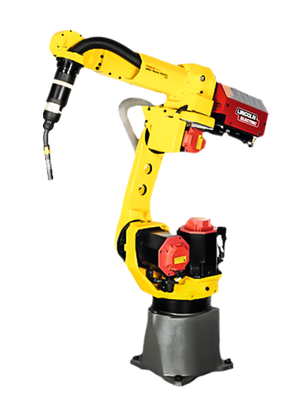
FANUC
The world's most widely deployed industrial robot brand. iGAM stocks a broad range of articulated, collaborative, and heavy-payload FANUC models with R-30iA and R-30iB controllers.
Browse FANUC Robots →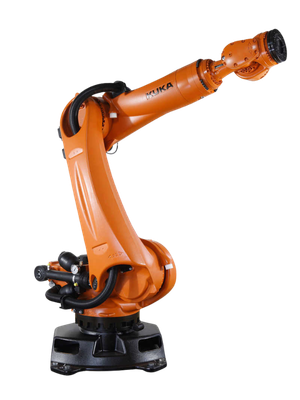
KUKA
German-engineered precision robots built for automotive and heavy manufacturing. iGAM KUKA inventory covers a wide payload range — from compact assembly to large-format KR 1000 TITAN models.
Browse KUKA Robots →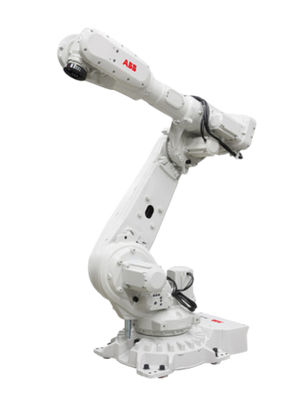
ABB
ABB robots are known for precision, speed, and versatility across welding, material handling, and assembly. iGAM carries multiple ABB IRB series models with IRC5 controllers.
Browse ABB Robots →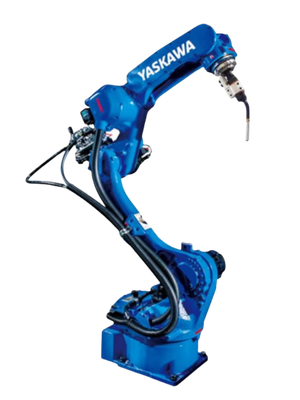
YASKAWA / MOTOMAN
Yaskawa Motoman robots offer exceptional speed and reliability for arc welding, spot welding, and material handling. iGAM carries Motoman units with NX100, DX100, and DX200 controllers.
Browse Yaskawa Robots →Ready to Find Your Next Robot?
Browse iGAM's Detroit inventory or talk to our team — we'll help you find the right unit for your application and budget.